Showing posts with label sermons. Show all posts

Friday, November 04, 2011

Pentecost XXI


Readings are here.

This gospel is a stumper for me. My sense of fairness gets challenged - why couldn't they just share? So what if the lamps all went out? Are the doors to the party shut for all time if we run out of oil? What were the oil sellers doing open for business at midnight? Who is the bridegroom? Who are the young women? What is the oil, the light?

I suppose it helps to know that Matthew was writing at a very uncertain time. The Temple is destroyed - Christian Jews and Pharisee Jews are wondering where they will find a center without a central place of worship. They are in competition for how to find that holy place in their midst without structures. Jesus was supposed to be returning soon but had not appeared yet - 50-60 years after his death and resurrection. End times was felt to be coming anytime. Persecution was a real threat. They were trying to figure out what to do in the waiting time. Those who did not keep the faith were a danger to the community. The oil has been variously interpreted as faith, good works, belief, - things that show the light of Christ to the world.

The last 3 Sundays before Advent (the church's new year) all speak of end times - getting us ready to end one year and look to the birth, life, death, resurrection cycle once more. We are moving out of "ordinary" time - the day to day life of the church to a more urgent time. We are made more aware through our readings and music and maybe the sermon that our time here is brief and we do not have much time to "gladden the hearts" of those who make this journey with us.

To me this speaks of being the light of the world -- the light of Jesus that goes into the dark places and consumes the darkness. How do we bear that light and keep it ever fresh and burning? Renewal of our spirits comes when all we do is centered on Christ. It is like a wheel -- if Christ is only one part of a wheel - others being family, work, leisure, sleep, etc - then we get out of balance and our wheel flies apart (like those pieces of truck tires on the highway - becoming a danger to all on the road). If Christ is our center and all our life flows from that center - then our balance is restored - our relationships are restored - one segment does not take precedence over the others. We live in alignment with God's dream for the world.

Amos - the prophet speaks of that centeredness - it is not just going to church and doing the right rituals -- it is all of life lived in right relationship (righteousness) and in commitment to justice for all. The psalmist calls out to God for help to fulfill what God would have him do and we pray: O God, whose blessed Son came into the world that he might destroy the works of the devil and make us children of God and heirs of eternal life: Grant that, having this hope, we may purify ourselves as he is pure; that, when he comes again with power and great glory, we may be made like him in his eternal and glorious kingdom; ...

It is really about right now -- not "after" -- we put ourselves out in the darkness when we do not practice our faith and keep our lamps (ourselves) brightly burning. We need feeding to keep from "burning out" -- but it is the paradox of love - that the more we give the more we have. The open giving hand can always receive more than a closed fist that clings.

So who is the bridegroom now? In the Gospel, shortly after this reading, Jesus says it is the “least” of these - the hungry, the thirsty, the stranger, the naked, those who are sick, those in prison – all who suffer. Are we ready to welcome this “bridegroom?” I think we are – I see it each day in the care for members of the congregation and for the world around us. Are we fueling our actions by our spiritual practices – prayer, study, worship, eucharist? I hope so and I fear burnout if not. Are we then the young women with our lamps? I think so – we are each entrusted with gifts and talents and asked to us them to the glory of God. The lamps are our particular gifts – there is no way to wish for another’s gifts or their particular way of being filled with the Spirit. But when we bring all our lamps burning together to the community – oh what a lovely light.

from an old spiritual
Keep your lamps, trimmed and burning,
The time is drawing nigh.
Children don’t get weary,
children don’t get weary,
till your journey’s done.
Days of darkness soon be over,
days of darkness soon be over,
the light is drawing nigh.
Keep your lamps trimmed and burning,
the time is drawing nigh.


h/t to Edge of Enclosure

Saturday, October 22, 2011

Living into love

Readings are here

Notes toward a sermon -
Almighty and everlasting God, increase in us the gifts of faith, hope, and charity; and, that we may obtain what you promise, make us love what you command; through Jesus Christ our Lord, who lives and reigns with you and the Holy Spirit, one God, for ever and ever. Amen. (collect)


Thessalonians – oldest letter – writing of the NT. Nurse – wet nurse. When he first came to Thessalonika – he did not know them – the letter shows the attitude of Paul when entering a community. A stance of love – tender love. The theme of love – not love of those we now – warm fuzzy feelings but an attitude – a way of being in the world –

Gospel – last of Jesus debates – the religious leaders are finally unable to say more. While it seems like 2 separate thoughts – both Matthew and Mark keep these 2 together (Luke puts the Good Sam story in here). The first part is an affirmation of all that the religious leaders and every person of faith know from birth -- the commandments of God and summary of the Law and the Prophets. The 2nd part is a debate about interpretation. Sometimes we know something so well we can’t back off to see the big picture – it takes a child or an outsider to ask a question that makes us see with new eyes. Jesus is saying to them – you have been so focused on your interpretation of Messiah – you have forgotten that Messiah will embody the 2 great commandments and the holy people of God will also embody these. When Leviticus repeats “You shall be holy, for I the LORD your God am holy.” Or I am the LORD your God – it is a command to live into what it means to be God’s people.

An interesting thing about Jesus words ---

Love God and love neighbor -- future tense

from Laughing Bird: Now in our reading, the word “love” is actually in the future form, not the imperative form. It reads more like a prediction that we will love than a command that we must love.

more of a promise than a command

We don't really know what it is to love fully in a relationship until time has been spend in the relationship --

giving our heart whole-heartedly - wanting the best for the other

pledging -- a promise -- like to consider -- all things come of thee o lord -- and....

what of God's own are we willing to part with in order to love God and neighbor with all our hearts, minds,

I am not talking just about giving to the church but what of our selves -- our gifts and talents as well as our money and time?

What are our priorities – each of us and all of us together.

As we enter this time of discernment about the future of St Catherine's -- take time to give yourself a round of applause and a gold star for all that has been.

You grew this church from a few people meeting with the Prayer book to this beautiful building with a Vicar and administrator and varieties of ministries, you support the Grub Club, the Soccer Club, Concert Series, Food Bank, the diocese, people around the world - like the mosquito nets for Africa and the bricks for Haiti.

Jesus talks about money more than any subject except prayer. Because he knows it reflects our true values. How we spend our money tells us what we value. Many of you generously give money to the church and all sorts of things that make this community a better place to live -- Many of you give hours and your talents to things like the Food Bank, city government, volunteering, teaching, sharing your gifts with others.

It is how we show our love for the coast and for the church -- the more we invest - the more we gain.


The Bible talks about a tithe 10% as a standard of giving - take a look at all you do for building God's "kingdom come"( as we pray each week in the Lord's Prayer.) I think you will be surprised at how much you do. Do we spend 10 % of our time loving God and loving our neighbor as ourself through our actions? Do we use 10% of our talents for building up God's dream?

The great thing about committing to a percentage -- it is not dependent on an amount. We of course like to know your best estimate - makes the budget committee feel better -- but if you say commit to 3% or 5% or even 10 % of your time, your abilities, your income - you don't have to worry any longer about making a certain amount of $$ - as your income ebbs and flows - so your pledge falls or rises. The percentage stays the same. Most people who do a percentage off the top - are amazed that it seems to make the rest seem like more. Why is that? I don't know. I just know that is the experience.


What I hope you will do this next few weeks is inventory your life – how do you spend your time – is 10 % doing things to love God and neighbor – I think you will find that most all of your time is doing this – whether you are having coffee with friends, shopping for groceries, calling a sick friend, working for your family or working at the Food Bank or Thrift shops or whatever – don’t be limited by “churchy” things. Examine it all and ask how does this show my love of God and neighbor? Same with the gifts you have been given. And with your money – how does all this show the priorities of your life of faith? As the Buddhists say – be mindful about everything. Or as Jesus says – where your treasure is there will be your heart. When you have done this turn your mind to the church and where you think that fits in the overall picture. Think about a percentage then give us an estimate of what that will be. We call it a pledge but it really is an estimate – a future we do do not know but hope will come to be.

Pray.

Friday, October 14, 2011

Who's your daddy? God or Caesar?


Matthew 22:15-22
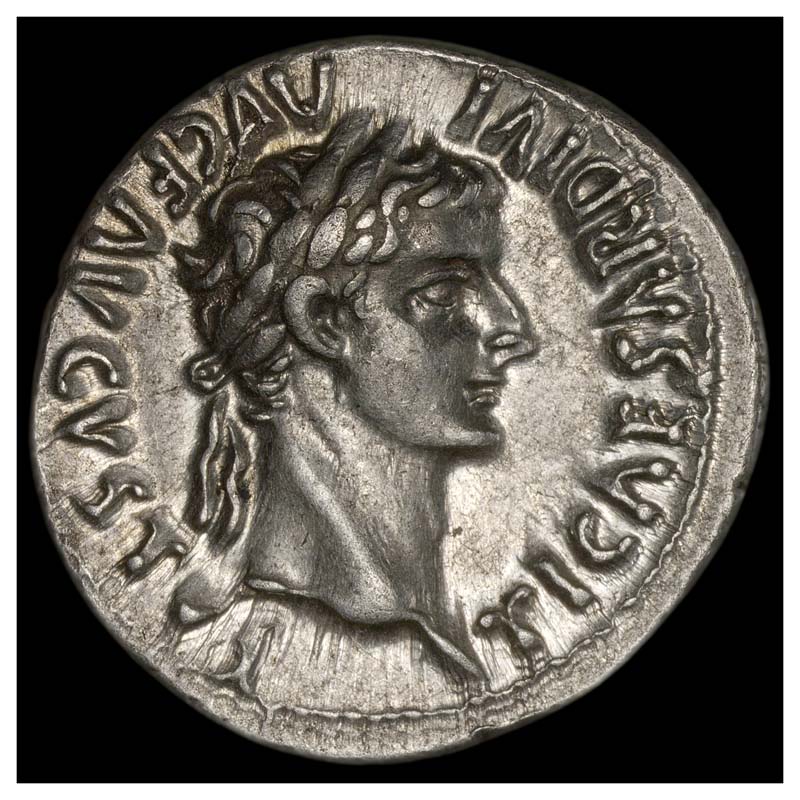
Then the Pharisees went and plotted to entrap him in what he said. So they sent their disciples to him, along with the Herodians, saying, ‘Teacher, we know that you are sincere, and teach the way of God in accordance with truth, and show deference to no one; for you do not regard people with partiality. Tell us, then, what you think. Is it lawful to pay taxes to the emperor, or not?’ But Jesus, aware of their malice, said, ‘Why are you putting me to the test, you hypocrites? Show me the coin used for the tax.’ And they brought him a denarius. Then he said to them, ‘Whose head is this, and whose title?’ They answered, ‘The emperor’s.’ Then he said to them, ‘Give therefore to the emperor the things that are the emperor’s, and to God the things that are God’s.’ When they heard this, they were amazed; and they left him and went away. NRSV


This reading is a continuation of the interchange between the religious/governmental leaders. Jesus has been telling them stories that convict them of not being faithful to God and God’s desire for a holy people. Now they think they have the ultimate gotcha! It is NOT about separation of church and state.

Matthew is writing after the destruction of the Temple and the setting is a dispute between 2 sects of Judaism – Pharisees and Christians. Only the Pharisees survived. The Herodians and Sadducees disappeared. The Herodians were closely allied with the Roman state with Herod – their puppet king. The Sadducees were closely linked to the Temple. The Pharisees, because they were organized around the synagogues and home rituals survived to be the base for modern Judaism – much changed from those days.

Jesus was speaking in at time when the Romans were the oppressors, the religious leaders were cooperating with the Romans and were getting rich will everyone else was becoming poorer and poorer and losing their land. The tax was hated as it symbolized oppression. It was a flat tax – all paid a denarius (a day’s wage for a Roman soldier). It was a terrible burden for most people, not so bad for Romans, and nothing to the religious leaders.

The religious authorities start out with obsequious compliments, which we know they don’t mean. And they set up their trap. Calling him a rabbi and asking him to offer a judgment (a common activity for rabbis – learned in the scriptures and called upon to decided points of the law). They think if he supports the tax, the followers will leave him. If he says don’t pay – the Romans will imprison or kill him. But Jesus catches them in their trap. By asking for the coin – he shows everyone that they are owned by Caesar – they are carrying his image (forbidden in Jewish Law) and that they are so rich that they can casually produce this coin – a day’s wage in silver). Everyone knows you can’t get rich like this unless you have sold out to the oppressors. Whatever the religious leaders might proclaim – they are not following their own traditions and faith.

So Jesus tosses them off – convicted by their own action (producing the coin). But then he says give to the emperor the things that are the emperor and to God that which is God’s. He is saying, in effect, you have sold out to the empire – therefore you belong to that not the reign of God. You are not bringing in the kingdom of God – you are opposing it by your deeds.

But the joke in it all is – everyone of the Jewish faith proclaims most every day in the Temple – Psalm 24:

The earth is the LORD'S and all that is in it, *
the world and all who dwell therein.
For it is he who founded it upon the seas *
and made it firm upon the rivers of the deep.
"Who can ascend the hill of the LORD? " *
and who can stand in his holy place?"
"Those who have clean hands and a pure heart, *
who have not pledged themselves to falsehood,
nor sworn by what is a fraud.
They shall receive a blessing from the LORD *
and a just reward from the God of their salvation."
Such is the generation of those who seek him, *
of those who seek your face, O God of Jacob.
Lift up your heads, O gates;
lift them high, O everlasting doors; *
and the King of glory shall come in.
"Who is this King of glory?" *
"The LORD, strong and mighty,
the LORD, mighty in battle."
Lift up your heads, O gates;
lift them high, O everlasting doors; *
and the King of glory shall come in.
"Who is he, this King of glory?"
"The LORD of hosts,
he is the King of glory."

In the end – they can give all they want to the Emperor but God will have God’s way. It all belongs to God. They know this in their heart of hearts. As Bp Tutu and Martin Luther King, Jr were fond of quoting “the arc of the universe is long, but it bends towards justice” God is already reigning when we turn to God and acknowledge that it is all gift. It is only ours to decide how to use it. Will we use our gifts to pile up more for ourselves “dying with the most toys?” Will use it to make the world a better place for all peoples. This is what Jesus is asking the religious leaders – are you going to be on God’s side helping to realize that dream – or not.

I think this is what the Occupy Wall Street protesters are saying – are you going to keep piling it up? Do you really want to do that? Or do you want to work for better education and opportunities for all. Life is very scary right now – almost 1 in 10 people cannot find work that they can do. Teachers are being cut – classrooms growing in numbers. Health care is scarce or non-existent for many. Any teacher can tell us – the key to educating kids is not fancy equipment – it is personal contact with the kids. Any health professional can tell you – access to care early plus prevention is the key to health. 1 out of 6 children do not know where or when their next meal will appear – how can kids grow and learn if they don’t get food? Immigration policy is a mess – it punishes those who want to work hard and raise their families in safety. Drugs and guns continue.

What Occupy Wall Street is saying – those of us who are suffering from unemployment, no health care and no education and no way to enter the system are asking those who have it all to look at how they got it. Who did they use to get there, how did the system work for them? It does not seem to say don’t achieve or go to forced sharing. Most of the messages I read are a plea for those in power to use that power for good not just to enrich themselves. I have been amazed at the Judeo-Christian words of the protests. I hope they keep on message and don’t turn to violence. I hope those with the power – the Congress, the wealthy, the religious leaders take heed and do something.

Jesus asks – “who’s your daddy” God or Caesar. Whose image do we bear?

Thanks to Howard Pilgrim for the exegesis.

Monday, September 26, 2011

Pentecost XVI


Thoughts toward a sermon -- readings are here.


The Earth reminded us of a Christmas tree ornament hanging in the blackness of space. As we got farther and farther away it diminished in size. Finally it shrank to the size of a marble, the most beautiful marble you can imagine. That beautiful, warm, living object looked so fragile, so delicate, that if you touched it with a finger it would crumble and fall apart. Seeing this has to change a man, has to make a man appreciate the creation of God and the love of God.

-James Irwin
(commenting on his flight aboard Apollo 15, July 1971)

To all earth's creatures God has given the broad earth, the springs, the rivers and the forests, giving the air to the birds, and the waters to those who live in water, giving abundantly to all the basic needs of life, not as a private possession, not restricted by law, not divided by boundaries, but as common to all, amply and in rich measure. -Gregory of Nazianzus c.329-c.389


This gospel is a challenge to humankind on earth. The earth is God’s creation and we are the tenants. Those who warn us of our pollution of the earth are voices who often are silenced – they are listening to the earth but many do not want to hear. Like little children who don’t want to listen to parents, we put our hands over our hears and chant – na na na na – I’m not listening”. Even if there are unlimited resources and no such thing as climate change, we are fouling the only nest we will ever have.

Listening to those trying to care for the environment in Egypt – they say it is important to be frugal in our use of the land, water and air just because it is important – even if there is no other reason. They of course can see the effects of climate change – with the loss of the edges of the country that are by the Mediterranean Sea. Islands in the Pacific are disappearing as the polar ice melts. In Wyoming the glaciers are shrinking year by year. In Egypt individual action is taking place- people are building solar water heaters –even in the poorest parts of Cairo. In this country there has been a lot of emphasis on local individual action.

I am impressed with the environmental consciousness of the area around us, the work on Nehalem Bay and the conservation easements. Recycling (note our latest newsletter for our efforts). People think twice about a trip to Astoria or Tillamook or Portland. Our own BAC member and mayor of Manzanita, Garry Bullard, wrote a great article on the balance of nature in Manzanita with the coyotes, raccoons, feral cats and us.

But individual action can only go so far. Local action does not help if there is no will in the greater mind to change. China is investing in “green energy” – they have been one of the biggest polluters but are changing. More advanced nations have to become active as the higher standard of living and use of resources makes them bigger consumers but also more able to afford the changes needed.

Today we are blessing our animal companions – they depend upon us for a planet that is safe for all creatures. The choice is before us – will we be like the workers in the field – thinking only of ourselves or will we hear the voice of all creation.

Thanks to Suzanne Guthrie, Edge of Enclosure for the ideas and quotes.

Thursday, September 08, 2011

XIII Pentecost

Readings are here.

Sermon thoughts:

I wrestle often with the question Peter asks about forgiveness. My experience is that people expect instant results if one forgives. The church makes one feel guilty if a person cannot forgive. Psychologists (pros and amateurs) tell us we will be the ones to benefit. But for me this just does not work. I need the acknowledgement of the wound and a time with my rage once I discover the depth of the wound to bring me back to myself and to give me strength to even move.

Today I read Jesus reply in a new way -- that the 77 times is not for 77 offenses but 77 times it may take before I can let the offense go and fully live into the future. Now I am reflecting on that and what it means for me. I know that the first step is acknowledging that the past cannot be changed, that the event happened and it was terrible for me and others. It was wrong and there is no changing that either. But with the idea that I can continue to let go even 77 times - somehow gives me hope that there is a day when it will no longer be fresh nor affecting my life. Like a broken bone - it may only ache when the weather changes - but I will be able to walk and run again.

Friday, June 10, 2011

Pentecost


Readings are here.

When we left the followers of Jesus last week they were staring up in the sky wondering, what next? Now they have spent the week+ gathering for meals, praying together, studying the scriptures and recounting their experiences with Jesus - doing what all have done since that time - gathering, lighting the fire, telling the story and breaking the bread - the basics of church.

Today we hear the next step in their journey in faith - the Day of Pentecost - the birthday of the church. The candles are lit by the Spirit and they begin to spread the word to the world.

Last Monday eve at our service one of the kids brought a pine cone in our "box." Every week one of them takes the box home and puts something in it for me to use to tell them about Jesus and the church. The pine cone reminded me of the Yellowstone fires. In 1988, Yellowstone Park experienced terrible fires. A combination of fire suppression which left trees of mostly one age and closely spaced, dry windy weather conditions, and other factors gave a welcome place for the fires to explode. The smoke in our valley 180 miles to the east filled the air. The sun appeared above the smoky clouds about 10 in the morning and set around 4. Devastation seemed to be the end of the grand old lady of national parks. As terrible as wild fires are - and we know them in Oregon as well - we learned that some pine cones cannot reproduce unless subjected to fire. They need fire to open and allow their seeds to be released and life to continue.

I see this as the story of Pentecost. Pentecost falls on the Jewish celebration of the giving of the law to the people through Moses on Mt. Sinai. Held at the harvest festival of Shauvot, it falls 50 days after the Exodus. The law is seen throughout the Bible as life giving - as the psalmist says, "a lantern for our feet" to help us live into that fullness of life that God intends for each of us. The Day of Pentecost for Christians falls 50 days after the death and resurrection of Jesus. When Moses received the law - the mountain was wreathed in thunder and lightning, smoke and fire. His face shone with the glory of God when he returned from the mountain - his face was so bright he had to wear a veil for the people to look upon him. In our reading today all the followers received the fire of the Spirit. It is portrayed as tongues of fire on each head. Or perhaps as Sister Corita says - they had "tons of fire." Each follower was filled with this fire or zeal - they ran to tell others - each in his or her own language. Many thought they were drunk but many caught the Spirit and soon the Word (not words - but the incarnate Christ) spread like a wildfire throughout the area around the Mediterranean and out to the whole world. The fire of the Spirit broke open their hearts and the seeds of Christ fell out into the world.

Am also thinking about languages and understanding each other and wondering how this event crosses the boundaries we set for one another. Some people who speak other languages are welcome - others not so much. How can the Holy Spirit bridge this divide?

Perhaps the fire of the Spirit can warm and open our hearts to God and one another. We can then witness to how Christ makes a difference in our lives - helps us to be more fully the persons we were created to be, gives us strength to go out into a hurting world and be the heart, hands and feet of Jesus and help others to know this too.

The Spirit comes in the way we most need it. For some it is an instantaneous conversion, for others a slow gentle process of deepening faith, as Mechtild of Magdeburg tells us: How God comes to the soul: I descend on my love, As dew on a flower. Sometimes we feel far away from the warmth and the light and wonder how to find it again. Even this is part of the journey of faith. Like the early disciples - women and men waiting after the Ascension for what they did not know - we continue to pray and study and be in community and do the work we are called to do. We tend our individual spiritual lives and the spiritual life of this place, St. Catherine/Santa Catalina, or wherever we find a community striving to be the Body of Christ. And we nurture the next generation. Whether it is providing care for toddlers on Sunday morning or supporting our kids and youth on Monday eve. This summer, with Godly Play and with our soccer club - more children will feel the care and concern of our church.


From Edge of Enclosure
celestial fire

Now an angel of the Lord appeared to
Moses in a blazing fire –

a fire that devours fire;
a fire that burns in things dry and moist;
a fire that glows amid snow and ice;
a fire that is like a crouching lion;
a fire that reveals itself in many forms;
a fire that is, and never expires;
a fire that shines and roars;
a fire that blazes and sparkles;
a fire that flies in a storm wind;
a fire that burns without wood;
a fire that renews itself every day;
a fire that is not fanned by fire;
a fire that billows like palm branches;
a fire whose sparks are flashes of lightning;
a fire black as a raven;
a fire, curled, like the colours of the rainbows!

-Eleazar Ben Kaller c 6th to 10th century liturgical poet
translated by T Carmi The Element Book of Mystical Verse


Lord
Take me where you want me to go,
Let me meet who you want me to meet
Tell me what you want me to say,
and keep me out of your way.

-The Rev. Mychal Judge O.F.M.
d. 9/11/2001


Yellowstone Fire

Monday, May 23, 2011

5 Easter

Readings are here.

Notes towards a sermon. I have gone back to my previous practice of notes instead of text since I rarely preach the totality of what I write. This week thought about Way, Truth, Life in light of living in a pluralistic society. As we follow Jesus (what he asks us to do) he shows us the Way, he embodies Truth and wherever he goes he spreads Life. As a holy people, a royal priesthood we are called to the same, putting away the stones used to kill the body and soul and return to love.

Being grounded and steady in our faith we can encounter other faiths and non-faiths with an open heart and mind, not apologizing for the differences but celebrating them. When I was at school we had many traditions and tried to have common worship each week. When we tried to meld it all together and use the least controversial bits of our traditions - it was bland and boring. When we offered the fullness of our worship and each participated as invited or able to participate -- it was rich and satisfying.

And as this was the week of the predicted Rapture - a thought from Facebook:
The world is not ending today, it is just being rebooted. Please be sure your security software is up to date. Run a full scan of your life and remove any malicious files which may be damaging your joy, stealing your hope, or slowing down your blessings. If you need more instructions, please refer to the user's manual, or put your hands together, bow your head and contact technical support.

Wednesday, May 04, 2011

3 Easter


Readings are here.

Notes toward a sermon:

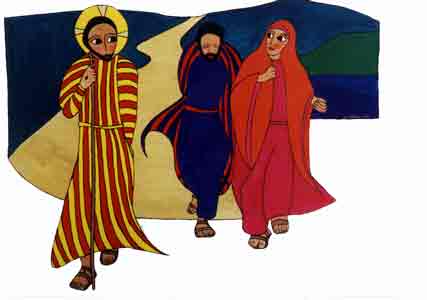
A couple is returning home from the heady days of their past week. Last week they had left the garrison town of Emmaus where they work for the Roman legions, stationed there. They had gone for the festival days of Passover. Making a pilgrimage to Jerusalem. They had been caught up in the crowds flocking to hear this man, Jesus. So kind, so embracing - healing just to be in his presence. They had seen his shocking confrontation in the Temple - turning over the tables of the money changers and sellers of birds and goats for sacrifice. They had shared meals with the other followers of Jesus - breaking the barley bread, drinking the rough wine. Full of hopes and dreams of a new world - a place where all can live in abundance and fullness of life.

Then the shocking end. Death as a criminal, on a cross, so awful. Now they scuff the dirt of the road as they return to their old life of daily serving the soldiers. It is a good job, the soldiers welcome their work, other peoples' sons stationed far from home, some seem to appreciate them almost like grandparents, a few are arrogant and abusive - but most are just like young men everywhere.

But the heaviness of heart - the joy destroyed - of hopes dashed. Will they ever know joy and hope again?

Now a stranger walking with them. Doesn't he know but now he is answering all their questions. Hearts on fire as he speaks. It is getting to be night time - they invite him into their home for the night. They are all hungry and tired from the walking and talking. It is dangerous on the roads at night. Hospitality is still the highest virtue in their faith. Welcome the stranger is the code of their ancestors from Abraham and Sarah to this night.

The woman lays out the bread and the wine on the table. They all sit as she lights the candles and says the prayers. They serve him first as is only proper - he breaks the bread.

Suddenly - there in the midst of the dailyness of life - the Lord of Hope and Joy - alive. Jesus is in their midst just as he promised whenever 2 or 3 are gathered. No fancy clothes or rituals -- just the everyday evening meal with strangers and family and friends. Always.

Saturday, April 30, 2011

2 Easter


Readings are here.

Every year, the first Sunday after Easter, the church reads this Gospel. It is a challenge to say anything new about the appearance to the disciples who are hiding in terror from the religious authorities and the soldiers of the Roman Empire. Are any of the women followers of Jesus with them? Is it just the 11? Hard to tell from the word "disciples," because in Greek if there is even one man in a group the male plural is used to describe the group. One wonders why Thomas was not with the group? Was he not afraid? Did they send him out for food or to see if the streets were safe for them. Was he tired of living in the atmosphere of fear? It was evening of the same day when Magdalene had been the first to see Jesus in the garden. Peter and the others had gone home after seeing the empty tomb. He and most of the disciples had run off after Jesus was sentenced to death on Thursday so it was Sunday evening when those in the locked room had experienced Jesus alive in their midst.

Now it is a week later. Thomas has resisted their story all week - saying - I have to see him with his wounds to believe you. Thomas appears 3 times in the Gospel of John. The first time is when Jesus insists on going so near Jerusalem after the death of Lazarus, when the sisters send for Jesus. While most of the disciples say it is not safe and they should stay where they are until things calm down, Jesus is determined to go. At that point Thomas says, "Let us also go, that we may die with him." (John 11:16)

Thomas appears again in John 14. Jesus is telling the disciples that he is going to prepare a place for them in his Father's house and that they already know the way. Thomas says to him, "Lord, we do not know where you are going. How can we know the way?' Jesus said to him, 'I am the way, and the truth, and the life. If you know me, you will know my Father also. From now on you do know him and have seen him." Thomas may not understand what Jesus is saying at that moment but in our Gospel to day he finds out.

So today we find our selves in that locked room with Thomas, with an unbelievable story that the a man has returned from death, is able to come into our midst regardless of the solid doors and locks we have built between believing and unbelieving. For that is what is being explored. The Greek does not say doubt. It speaks of two states of being - being believing and being not believing. Doubt, in its way, is part of believing - it is saying "maybe" "maybe not" - having a part of oneself that is open to the possibility. Thomas is not believing - there is no room in his heart or mind to accept what happened to Magdalene, the other women, nor those in the locked room. He is not doubting at all - he knows. Jesus is dead. This is not a Lazarus story - Jesus is dead and buried and gone.

Now the door is locked once again and Thomas has locked out everything his friends are saying. And yet - still - suddenly - Jesus is there. Does Thomas even need to touch the wounds that Jesus shows him? He "gets it" -- and even more so than the others - he declares "my Lord and my God" -- the answer Jesus gave him to his question of John 14 is standing before him - Thomas sees God in the wounded One. The way to God is through looking at the wounded of this world. We will see God when we present to wounded-ness - our own wounds and the wounds of the world.

Jesus says in Matthew 25 - that when we help the "least of these" - those who are hungry, sick, imprisoned, without clothing, thirsty, or the stranger we will be helping Christ. That is what our Gospel shows us today. When we don't hide our wounds or hide from others who are wounded - we will be on the Way, the way that leads to God.

Saturday, April 23, 2011

Easter


It is early Sunday morning, it is still dark, a dark that is only lit by Magdalene's oil lamp and the stars spread out across the sky. The dew is thick in the garden, the smell of the grass and the dirt and the trees fills the air. The stones are cold, all the heat of the day gone out of them. Her feet carefully pick their way along the path. The silence of that Sabbath is heavy in her heart. It has been more than a whole day since the one they all loved had been so brutally killed. The one in whom they had placed so much hope, who made their hearts leap with joy, who healed and taught and loved them with such abundance, dead and buried here in a new grave. Covered with a stone so heavy only several men could move it. Magdalene comes to grieve - to be close to him once again, even it is just his linen wrapped body behind a stone. She goes to the place where she last saw him before they placed him there, rolled the stone over the opening and the soldiers appeared to chase away any followers who might show up. All seems lost. Empty. Gone.

But, what's this? The stone has been moved, the soldiers are gone! She runs to tell Peter and the others. They run to the tomb and see that Jesus is not there - they believe Magdalene now - so return home. Once again it is just the woman - alone. She bends down and looks in the tomb and sees 2 angels. They ask her why she is weeping. Why wouldn't she be weeping - not only is the one who called them his beloved, the one who had healed her of her torment - 7 demons they had called it - and whom they loved is not only dead - his body is gone- there is nothing left. And then another person asking "why are you weeping? who do you seek?" I can almost hear her voice rising in a sobbed plea - "where is his body? what have you done?" And then, and then, the answer -- her name. Called by name. Like all those places in the stories of her faith and her people that she had heard all her life -- where God calls the people by name, each named by the Holy One. Called into life, into fullness of being. You no longer have to cling to things or your fears or to your past - anything that keeps you from really living -you can let go - you can live because I live and have shown you how to live and how to love one another so that all can live.

Today we heard the story of Peter - he has been confronted by Paul who says that Gentiles can become Christians without the rituals that Jewish men have to undergo. Now you know Peter is a leader in this new religious movement - and he knows how things should be - after all he was there at the beginning and knows the way we have always done things. What Paul is saying is NOT how it should be. Good grief - if you let Gentiles join without doing it in the correct way and with only a few rules - pretty soon anyone will be joining and who knows where that will lead? Peter is invited to eat at Cornelius' house - he "knows" that is wrong. But these people seem to be following in Jesus' Way. A dilemma

But then he has a dream - where Peter is shown more of what Jesus had been trying to teach him. In the dream food is spread out and God invites him to eat -- but some of the food is ritually unclean (bacon, shrimp, etc) - Peter is horrified, gags at the sight of it, even. But God commands him to eat - saying nothing in creation is unclean. It is all holy. This is where our lesson today starts - just after this dream. Now Peter understands -- Christ came for all people - not just a small band of followers - but for all who want to follow Christ. Over and over the church has had to rediscover this teaching - at one time the church has thought some were beyond the love of God - could not be seen as fully human--slaves, Native Americans, women, gays and lesbians, people with certain diseases, those who had sinned and not repented or paid for their sins. And over and over God has revealed the Holy in each of these --showing up in the most surprising places.

When we seek the things that are above - as the letter to the Colossians says -- we see God everywhere - we see LIFE everywhere - even in unlikely people, even though they have it deeply hidden behind their fears and their deeds. If we only see with our own eyes - we often just see brokenness and death and emptiness. When we look with Christ's eyes- we see the heart. We know the compassion that is offered to each of us no matter what and we want to offer that to others.

The other day I received a note from a friend who is a priest in the LA area - who some of you may know as he was a candidate your previous Bishop election- Howard Anderson. A close friend, mentor and bishop of his is dying of pancreatic cancer - his name is Bob Anderson. A bishop who was not afraid to stand up against the abuse of children, women and men by clergy in the Episcopal Church. A bishop who through this work brought many back from the dead to new life - death of the soul from abuse in the church. My friend writes:
We had just embraced, both of us in tears. It had been a good visit, even knowing that this would be the last time I saw him alive. Bishop Bob Anderson has been so much more than my ordaining Bishop. He has been mentor, cheer leader, promoter and wise counselor. The term clergy used to use for Bishops, “Father in God,” was more than appropriate for the relationship we have had over the years. As I opened the door to leave, I looked back, the frail, rail thin man who sat in his chair still looked to me to be the 6’2” 195 pound basketball player that I first met 34 years ago. That’s kind of what happens when we see with the eyes of love. I waved, and he threw me a kiss, and said, “See you on the other side!” He said that with such steadiness, such certainty, that I will never, ever forget the feeling I had. In the midst of Lent, I had an Easter, alleluia, moment!

And now we are in that Alleluia moment - in fact, are always in that moment because Jesus showed us that death has no power. Not the every day deaths we feel when in despair or struggle or falling short - nor the death that will come to us all one day. There is no power in these things - we need not cling to them or fear them -- the power of love and self sacrifice and compassion will win out. That is the Alleluia of Easter. or as I like it in Spanish ¡Aleluya!

Saturday, April 16, 2011

Palm/Passion Sunday


Readings are here.

The streets are packed with people coming to the city for the Holy Days. The Roman legions are everywhere- nervous young soldiers sent to reinforce the regulars in the notoriously difficult place. Probably they are wondering about the Jews and their commitment to one God. Wondering why they can't just worship like everyone else - giving worship to the emperor, making offering to the gods of Rome? You can't even see their God - in fact they have a rule about not making images of their God even have to have the Roman money changed to use it for their offerings to this God

The religious leaders are nervous - this is the time of year when every sect comes to the city. Some come just to worship but some come with trouble on their minds. The Essenes are okay - usually just spend time out in the desert in their caves but those Zealots - plotting the overthrow of Rome - bringing trouble to all of us. The religious leaders try to make everyone keep a low profile - don't attract the attention of Rome. Survival of the people is uppermost in their minds.

Into this roiling mass of humanity - a man comes riding into Jerusalem - on a donkey no less, embodying the prophecy in Zechariah:
Rejoice greatly, Daughter Zion!
Shout, Daughter Jerusalem!
See, your king comes to you,
righteous and victorious,
lowly and riding on a donkey,
on a colt, the foal of a donkey.


Soldiers and religious leaders thinking -- Just what is not needed - someone claiming to be the king - and the crowds - going beserk - throwing down their outer covering - their cloaks - standing half naked in just their coats - shouting Hosanna! Cutting branches to place on the road. A mob - so easily influenced - moods that can swing from joy to anger to violence in a moment.

But maybe this is the one? Could it be? The king who will free us? Where is his army? All our hopes of Messiah - the one to give us back our lives - could it be?

So many expectations placed on the man on the donkey.

This is where we leave our first Gospel today. At the end of our service we will read Matthew's version of the Passion - the death of Jesus. As we read it you will be asked to read the parts where Jesus speaks to remind all of us that we are the body of Christ in the world today. But we are also all the others in the story. So often in our history - Christians have used the words of this Gospel to accuse Jews of terrible things - to excuse violence against Jewish people. But remember that Matthew is writing to Jews, he is a Jew, Jesus was a Jew -- it was written in a time of division among people who were all the same - like family -brothers and sisters in the faith. Each side had a different view of the meaning of Jesus, was he the Messiah of prophecy or not? There was a controversy and the Roman state killed Jesus. Crucifixion was the way the Roman Empire carried out executions. The Jews did not have this power. Matthew is writing to warn the early Christians of how easily they can become the same as their enemies - taking up violence instead of following the non-violent ways of Christ. The church is the Jews in Matthew's Gospel - the warnings are to the leaders of the early organizations of Christians.

We are also the ones in the crowd - the ones who easily turn from adulation to calling for crucifixion. We know this from our own experience of putting someone up on a pedestal - a politician or other leader - only to relish their fall from on high. We are Pilate - washing our hands of the issues of the day - not recognizing whey we have played a part in whatever goes on by not speaking up, by walking away from things we can change. We are the disciples (we pray not Judas) who fell asleep or denied Christ - when no one knows that we are Christians - even by our actions if not our words. We are Simon of Cyrene - doing the right thing - hefting the cross and carrying it for another. Whenever we help another - go the extra mile to make sure someone has what they need for a better life. And we are the faithful women and friends who did follow all the way to the cross. Who stand and watch and wait - those who stand vigil against oppression and violence, who serve in the community and around the world to save others from death - who minister to those in prison, the stranger - the immigrant, those who are hungry and without shelter -- all who risk their own well being to be present for others so those can also have the abundant life that God promises.

As we read the Passion Gospel at the end of the service and you go out in silence -- meditate on the various people you hear speaking in the Gospel. And remember that we are the Body of Christ - as you speak his words in the reading- think about how it must have been for him - and how does what he says and does continue in us today.

Let us pray in the words of this prayer found in A New Zealand Prayer Book:
Jesus, when you rode into Jerusalem
the people waved palms
with shouts of acclamation.
Grant that when the shouting dies
we may still walk beside you even to a cross.

And may the cross carry you through whatever pain and suffering assails you.
May you go forward with courage in the faith of Christ,
May Christ the crucified convince you that God loves you and has forgiven you,
May you find in the cross a sure ground for faith
and a firm support for hope.


And a thought from John Stendahl on Facebook - for pondering:
But it surprises me, indeed amazes me, that I hardly ever hear any comment on the profound irony of this image. The blood is of course not only guilt but atonement, the blood Moses throws upon the people, the blood of the lamb, the blood that strangely cleanses rather than only stains. How could Matthew have written that phrase without hearing that resonance, and how can we read the words without hearing it?


Image from Romare Bearden

Saturday, April 09, 2011

Lent 5


Readings are here.

This week in our Bible Study we looked at the various characters in the Gospel. We thought about what it would have been like for each of them and we were like or unlike each one. As we read the story again this morning, did any of them stand out for you? What did you wonder about each one? The sisters are mourning - each in her own way - Mary sitting beside Lazarus, Martha busy with greeting neighbors who come to mourn with them. The disciples are afraid, except for Thomas. Lazarus is dying and then dead and buried. Jesus moves with confidence through the scene but even he is caught up in the grief and weeps. Any of us who have been through the death of a loved one can recognize all these people and their feelings and actions. Who I wonder about most is Lazarus.

Perhaps it is because of the lessons that come before the Gospel in today's readings. The dry bones are called back to life, the psalmist cries out for hope where he feels there is no hope, Paul in his letter to the Romans offers life in the midst of death. Lazarus embodies all these themes.

The people of Israel think they might as well be dead - they have no hope, they have no temple, their leadership is dispersed, they have fallen from power and nationhood to conquered victims. What could symbolize their status more than a field of bones. The psalmist echoes their cry -- "out of the depths" - what is deeper than the grave? How can there be any hope? How will they be restored? Yet like a lonely sparrow singing for its flock on a housetop - the psalmist sings that they can hope again.

Paul talks about the sort of death that comes from separation from each other and God - sin, that chasm that seemingly opens when we are cut off from one another or cut ourselves off from God. In some ways this is the worst death - a living death.

I see Lazarus in a place like this. Cut off from family and friends, bound up first in his illness and then bound by the wrappings in grave. Entangled in death. Once he sat at table with his sisters and Jesus, a place bright with conversation, sustained by the bread and wine shared. Now cut off from them by death.

I wonder how we become cut off from family and friends, how can tables of friendship become empty and forlorn? What parts of our selves are dead to hope and joy? Where in our lives are we bound by expectations of ourselves and others. Where do we feel like something within us has died. Places where we feel I might as well give up?

In Lander I used to have tea with a woman who certainly could have felt this way. She was quite old, had health issues, was almost blind, her husband had divorced her and married a younger woman after she had used her money and ideas to help him live his dreams. But she did not lay down and die though many days were hard. The things that sustained her were her faith - worshipping regularly even on those days when she felt like God was far from her, seeing friends and being a friend - I never visited her that I did not come away energized by being with her, and her joy of being alive. I still remember the day she told me that she had had two fruit trees planted in the back yard. She told me her friends thought she was silly as she could not see them and she would not live long enough to enjoy their fruit. But she did not stay bound by their ideas of what she could NOT do - she was doing it for a sign of her hope and belief in the future - even one she might not see.

This is how I see this story in the Gospel of John. Jesus is that kind of hope - the one who breaks through our daily deaths, and promises life, who calls us to break bread and drink wine that we might consume that hope he incarnates - brings into the world. Death has no power, what we have done with our lives until this moment is not the point - the point is choosing life now. We can leave behind those things that separate us from one another. And God promises that nothing we have done nor is done to us can separate us from God. And each time we take communion - we affirm that truth - we take the bread and the wine and know that God dwells within us each time - it is sacrament - making holy - acknowledging that we are the dwelling place of the Most High God. Jesus calls Lazarus from his isolation and separation - "come out" -- come out and live fully as you were created to be. And he expects the community will follow up, saying, "unbind him" -- for so often the binding has come from outside - the messages that we are not worthy enough, have the wrong sort of whatever - all the things that people use to build themselves up by tearing others down. Jesus confronts the isolation and separation -whether of our own or others making - and says - do something about this. Don't take it laying down. Do not stay dead, do not allow others to stay dead.


Image by William Blake

Saturday, April 02, 2011

Lent 4


Readings are here.

Notes for a sermon- redux.

Seeing is believing – true or not?

In our gospel – much is revealed to the disciples and the people around Jesus – God’s truth is shocking to them. What they see Jesus doing is hard to believe. Many in those days and still today believe in a cause and effect between bad things happening to people. Sometimes it is true – if you do certain things bad results will happen – but mostly things just happen. Jesus says the man was born blind not because his parents or he were sinners but whether or not is is of God shows in how it is perceived. Is God revealed through whatever happens. People saw Jesus ignoring the rules of their faith. Kneading the mud – was work – which was forbidden on the Sabbath. How could Jesus be a man of God if he did not even keep the rules that they believed God had laid down for them?

Many in our story do not believe this is even the same man – they had always seen him as “that blind man” – probably never really looking at him as they tossed a coin or two into his begging bowl. They really do not believe that he has anything to say about the nature of God. He is probably was dressed in poor clothes and had not been educated – so how could he know anything about God’s ways? They could not believe that his experience was even true. They were the “good church people” – they knew it all – they were the ones who were blessed by God – he could not be blessed as a blind person and a beggar.

Jesus confronts this way of seeing or really not seeing in this story - he sees the man as beloved of God, he sees the laws of faith as of God when they uphold this vision of beloved. He sees with God’s heart. He teaches how to see the kindom of God in their midst. Sin for Jesus is being unable to see one another as brothers and sisters, for only being able to see who is “in” and who is “out,” anything that separates us from one another, the creation and God.

Samuel is sure that the king will be the eldest or the strongest and so has his doubts when God says no – keep looking. When David appears – he is the youngest and somewhat more beautiful than the standard appearance of the other brothers – perhaps assumed to be more frail?

In the psalm – the author sees God’s presence even in dire circumstances – though he is walking in the valley of the shadow of death – in terrifying times – he sees goodness and mercy.

Ephesians emphasizes this choosing to live in the light of Christ – in truth – seeing with God’s eyes and not just our own. It tells us we can make choices to see or not see. Following Christ, worship, prayer and study can give us new eyes – can you think of something you believed in the past that has been changed by your faith?

Jesus confronts all our “not seeing” – how we are shaped by the rules we choose to live by, how other people’s perceptions affect our seeing. How familiarity often results in dulling the senses to the miracles of life around us. Jesus often recommends that we become like little children to see the realm of God. Walking with a 2 year old often is less about destination and more about delight and curiosity in the moment. Our gospel calls to us to see others with God’s eyes- how are they beheld in that loving gaze? How are we seen in that loving gaze?

In the book, The Little Prince, he has a rose that he believes is unique in all the universe. He happends upon a garden where there are many roses just exactly like his rose. He is sad to find out that his rose is just a common rose. He meets a fox who shows him how to see – the fox tells him his rose is unique in all the universe because of the relationship. The rose is not like all the others because of the time spent together and the care he has shown for the rose. It is not something that can be seen with the eyes – it is as the fox says: One sees clearly only with the heart. What is essential is invisible to the eye.

Jesus confronts all our “not seeing” – how we are shaped by the rules we choose to live by, how other people’s perceptions affect our seeing. How familiarity often results in dulling the senses to the miracles of life around us. Jesus often recommends that we become like little children to see the realm of God. Walking with a 2 year old often is less about destination and more about delight and curiosity in the moment. Our gospel calls to us to see others with God’s eyes- how are they beheld in that loving gaze? How are we seen in that loving gaze?


The Little Prince

Saturday, March 26, 2011

Lent 3


Readings are here.

Sermon notes:

This is the reading that was the Gospel at my ordination as a priest. It is so rich with so many themes. The Orthodox call the Samaritan woman St. Photini - the enlightened one. Well stories in the Bible are always about betrothal - those seeking a wife or husband meet at the well. Does the Samaritan woman pledge herself to Jesus in this encounter? She goes to the well at mid-day - just the opposite of the parallel story we heard last Sunday of Nicodemus visiting Jesus in the dark of night. Many have speculated about why she would be out by the well at noon. Most of the women would go in the early morning and make a daily social occasion of their heavy water bearing work. Why had she had 5 husbands? Did they die? Did they put her away? Perhaps either she or her current partner did not marry because they felt it brought bad luck? She has had a tumultuous life to date - 5 husbands in the short life that most people had in those days. Whatever it was Jesus knows her deepest secrets.

Her response to encountering Jesus and his tender compassion towards her - is the urge to share it with all the townspeople. The disciples had gone to town to buy food - why didn't they bring back anyone to see Jesus? This woman shares in such a powerful way that the whole town believes and comes to learn more and believe even more deeply. Jesus uses this story to say the harvest is ready -- go out into the fields. The Pacific NW is the least "churched" of any area of the country - but what are the essentials that St. Catherine's offers that might entice others to join us?

We say we want St. Catherine's to grow - what do we mean by that? Do we mean people filling seats? or people finding a spiritual home - a place where they can join a community seeking the Holy? What do we find here that brings us back each week? What are the barriers we put up to newcomers? This church is one of the friendliest Episcopal churches I have ever attended. When our daughter came with me one Sunday - she was struck with the welcome that was not related to being my daughter - but you seemed genuinely interested in her for who she is. From that point what happens? Is there room for new people to move from welcome to finding a place with us. Where will they sit if they come through the doors. What about children? How can we build on the things people already find here? Extending the welcome -- church growth people say that a followup phone call or visit after someone comes to church is important - within 24 hours. Even more important a connection with a member - not just the priest. Those who attend 8 a.m. invite newcomers to go to breakfast - a great start to incorporation. The men invite other men to the Altar Boys-- another great way to help people find a place in our community.

Concerts for the community is one of our gifts and brings many through our doors. There is an active group who sees to this offering. Last week we had a wonderful first concert in the Mary and Paul Barthelemy series. This afternoon Jennifer Goodenberger will perform her music. In April Susie Godsey and David Carlson will offer yet another afternoon of enjoyment. But how multipurpose is our space? Could we do anything to make that experience more inviting? Are any who come to the concerts people who might join us for worship? Do we have materials available for information if they are looking for a church?

We are linked with the Center for Contemplative Arts - a place where people can explore their spirituality in a variety of ways. People who might not at first consider "church" -- can find a space to begin or continue their journeys in faith through art, meditation and other spiritual exercises. While not a formal part of our structure - many of us attend or participate in the offerings there. Do others there know we are members of St. Catherine's?

The service on Monday evening has brought us members who find worshipping in Spanish a community of welcome. Children are at ease and take part in the music and the liturgy - helping at the altar - playing the rhythm instruments as we sing.

A sign of a healthy church is one that cares for more than itself -- the Grub Club is one project that reaches out - to provide healthy lunches for children who might otherwise go without during the day. We are trying to reorganize that so the work is spread more widely. We have a current survey that says 50-60 children need this program - I am hoping that some of you will volunteer to join an oversight committee to revision how this program might continue. A committee that would also look at the other outreach projects and give oversight to those projects. There are also many of you who serve in the community in a variety of ways - teaching, running the Food Bank, looking in on neighbors, active in organizations that make the area better for all, voting.- active in government -- is your faith a motivator for these actions? Do people know you come to church at St. Catherine's? Are you ready to talk about your experiences if anyone asked. You don't have to beat people about the head with "are you saved" -- just go about your daily life and let your light shine.

To make ourselves more visible - we are revising our web site to make it more user friendly - so we can highlight current events - show who we are. Most people find a church if they are looking via the web site.

But really the most important step is invitation - most people join a church because when people show an interest - someone who is already a member invites them and accompanies or meets them there the first time.

The Samaritan woman gives us a model for sharing our faith. She tells of how encountering Jesus has changed her life. She is not afraid to say why it makes a difference. She is not thinking about church growth - she is sharing an encounter that changed her life. Perhaps the disciples could not be heard because they were outsiders - did not know the struggles of the Samaritans - the Samaritans knew her - they could see the transformation beyond mere words - they wanted what she had found.

Think about your own journey in faith - is this a place where you can "live the questions?" How did you get here - what has been your faith journey? What led you to walk in and what made you stay? Could you tell someone else about it?

As your interim vicar I have heard some of your stories of your encounters with the Holy One -- they are amazing. Maybe we might start with sharing those with each other - practicing before taking our "show on the road"? Ask someone you know at this church about their story. You will be surprised and you might surprise yourself in the telling of your story.

People are thirsty- we have a well.

Image by He Qi

The welcoming church h/t to Scott Gunn at 7 Whole Days.

Saturday, March 19, 2011

2 Lent

Readings are here.

Notes towards a sermon:

Nicodemus – victory-people – (Nike – demos)

John –used for the gospels in Lent (A –Matthew, B-Mark, C-Luke) – parallel stories – this week – Nicodemus – next week Samaritan woman.

In the world of John there is a split between the Jews who followed Christ and those who did not. – a religious split that you can see referenced all through the Gospel of John – why there are such harsh words for “the Jews” – it is a gospel that has been used to justify terrible things- yet it arose between kindred and close friends and neighbors.

It is also a world where you are born into a certain status and you stay there – you don’t move. Your honor is dependent on who are “your people” – until fairly recently in history – this was the case – you might as well not try – unless you could somehow become attached to a higher status family – that was the only possibility. Jesus in this is shaking the very foundations of society in this passage. No wonder Nicodemus is confused about the idea of being born again. His reference to the wind blowing where it chooses is scary not reassuring – but yet

Nicodemus is a seeker—though he is a Pharisee, a leader of his people – he has not found a home in his faith. (Jim and I – where is home?). Else why would he come to Jesus. In the night – not only perhaps so no one would see him but perhaps also symbolizes “being in the dark” as we might say – about his relationship to God. I wonder if he had something happen that shook his faith? That caused him to wonder, “where is God?”

Jesus has come to the one who offers healing – healing for the whole world through those who follow him. Moses lifted up the snake to cure the people. Jesus will be crucified for confronting the divisions of the world and offering a way of healing. His death will show the world that death is not the end. Death is separation and believing that some humans are better than others – not a way of life.

Abram was also a seeker – in his world you did not take off from your ancestral homes – but he felt God calling him out of his settled life – to go out to be a blessing for the whole world.

Neither Nicodemus nor Abram (who we now call Abraham) were called to stop with themselves and their close kin – they were called to be a blessing – to bring a new understanding to the world. Paul refers to Abraham’s faith – that there was one God who could be trusted to keep faith with humankind. Nicodemus by the end of the Gospel is bringing a hundred pounds of spices and oils for Jesus anointing after his death – “hundred” – unheard of - his conversion – his love for Jesus showing in this over abundance.

I think these readings give us hope – no matter where we are on our journey in faith. Whether we are confused and wondering like Nicodemus or if we are stepping out in faith like Abraham. The key is asking the questions and walking the path of life. Perhaps as Rilke says:
to have patience with everything unresolved in your heart and to try to love the questions themselves as if they were locked rooms or books written in a very foreign language. Don't search for the answers, which could not be given to you now, because you would not be able to live them. And the point is to live everything. Live the questions now. Perhaps then, someday far in the future, you will gradually, without even noticing it, live your way into the answer.

Tuesday, March 08, 2011

Ash Wednesday


Readings are here.

Today we begin Lent – taking time for our spiritual lives. Traditionally we have given up things like chocolate or other candy, alcohol, meat, or other physical sacrifices. These are worthy things to do as each time we are are confronted with the thing we have given up we are reminded that it is Lent and a time for reflection on our spiritual journey. Taking on a spiritual discipline is another common practice. Daily reading of scripture, meditation, working for the Food Bank or some other agency that serves those with less, are some ideas. USA Today http://www.usatoday.com/news/religion/2011-03-01-Lent28_ST_N.htm noted this week that many are doing other activities for Lent. Some are doing a carbon fast – trying to use less electricity and more mass transit. UMC is encouraging all its members to give up alcohol – which Methodists are not supposed to drink in the first place – but to confront the use of it in their midst. I did that one year in solidarity with all who have abuse of alcohol issues. I was amazed then at how many tried to get me to take a drink. I think times have changed as everyone seems to offer alternative beverages now. Maybe that Lenten fast served a purpose – at least I hope so.

When we think of the words of Ash Wednesday - remember you are dust and to dust you shall return - remember that the scientists have learned that we are of the same dust as stars - so remember also you are stardust and to stardust you shall return.

This year I would like to share with you another way of looking at Lent – I used this a few years ago and I still like the ideals it puts forth – a way of keeping Lent that improves my relationships with others, the planet, myself and God.

Fast from judgment, Feast on compassion
Fast from greed, Feast on sharing
Fast from scarcity, Feast on abundance
Fast from fear, Feast on peace
Fast from lies, Feast on truth
Fast from gossip, Feast on praise
Fast from anxiety, Feast on patience
Fast from evil, Feast on kindness
Fast from apathy, Feast on engagement
Fast from discontent, Feast on gratitude
Fast from noise, Feast on silence
Fast from discouragement, Feast on hope
Fast from hatred, Feast on love
What will be your fast? What will be your feast?


After Bishop Arthur Lichtenberger

Saturday, March 05, 2011

Last Sunday after Epiphany


Readings are here.

Today is the last Sunday of the season of Epiphany – a season of revelation and revealing. Beginning with the Baptism of Jesus by John to the revelation of transformation on the mountain – transfiguration. The question behind each reading in this season of Epiphany seems to be – how are we to reveal Christ in this world as he reveals himself to us? In the baptism – he plunges into the waters of our life – the one without sin immerses himself fully in the world showing us eternal life – not in the hereafter but in the here and now. In the absolution after the confession we pray, “keep us in eternal life”

Once again in the gospel today Jesus urges us to enter fully into life – go down from the mountaintop of encounter with the Holy One, don’t stay in the wonderful memory – live.

Peter, James and John accompany Jesus to the high mountain where they experience the fullness of Christ. With Moses and Isaiah at his sides, Jesus seems transfigured – the Greek is metamorphoomai – like a larva becoming a butterfly. He revealed his true self – and the reaction was typically of the “disciples are clueless” variety. Peter babbles on about building booths – probably like Jews do to celebrate the Exodus – the feast of Booths – Sukkot, a remembrance of living in a fragile tent or lean-to in the desert. It is a natural reaction – coming out of his culture. Trying to make sense of something completely new and mind blowing by connecting it to something we know. But in the midst of this – a voice speaks from a cloud – repeating the words heard at Jesus’ baptism, “This is my Son, the Beloved; with him I am well pleased; listen to him.” Stop talking – listen.

The disciples fall down in terror. Jesus comes to them and touches them – reassuring them and they move down into the valley – the valley where life goes on in all its wonder and messiness. You would think they might be changed by this experience but no – it takes more events and encounters and revelations until they are ready to go out into the world with the message of the revelation of God in Jesus.

One of the key phrases in this reading is “listen” – we can’t really capture the word in English -- (akouete) is a present imperative, implying continual or repeated actions: "Keep on listening to him" or "Continue to listen to him. It will take more than one retreat, one encounter, one sermon, one reflection – keep listening is the message. It is why I like to begin all meetings with a Bible study – so we can listen before we talk, listen to what God might have to say about the issues before us. And I like to just use whatever is the lesson for the day – not pick one that “I think” has something to say. It is why I like the Lectionary – it makes me wrestle and listen instead of allowing me to just pick a comfortable passage. It is why I like the Daily Office as a daily discipline – though I have been a slacker lately – it sets the day in the context of something to think about as I go about my days. It is why I wrote Streams of Mercy – collecting those bits into one place for contemplation each day.

This Wednesday, after our festive feeding frenzy of the Pancake Supper, we enter into Lent – with the imposition of ashes on Ash Wednesday. Lent is a good time to enter into listening. St. Catherine’s will offer a variety of opportunities for you to keep Lent and listen for where God is calling you next in your journey. Instead of giving up chocolate – think about taking on a spiritual discipline, or attending one of our extra events, or just reading the Daily Office each day at home. Slow down, take a break from the constant barrage of “news” or anything that makes you anxious. Walk on the beach, do some gardening, tend your soul, tend your mind, tend your body.

Jesus was transformed in the eyes of the disciples – they saw him in a new way. He did not really change but showed them how he has always and will always be. Their ability to see was changed. The transformation for us is to join this metamorphosis – to gradually become the hands and feet of Christ in this world. To become that which God has seen from the beginning. Listen.

Friday, February 25, 2011

VIII Epiphany


Readings are here.

From the psalm:
But I still my soul and make it quiet,
like a child upon its mother's breast; *
my soul is quieted within me.

When I read through the lessons for today - I immediately thought of our primroses. A few weeks ago we were buying some primroses. Our children and their children came to visit and so they sat on the porch unplanted. From the warm sunny false spring of early February - the weather has been more like Wyoming the last few days - cold, bitter, snowy. So we have been putting our plants in the garage at night and maybe next week we will get them in the ground where they will have a better chance to grow and thrive.

Here at St. Catherine's we hope to grow and thrive as a point of God's presence in the communities we serve. Santa Catalina, served by Padre Jorge (George) is certainly growing and thriving with the majority of our younger families and children. Last week 75 people attended a Presentation of a three year old child. St. Catherine's is active with service to the the area. New members have come to join us and are adding their gifts to the already wonderful gifts present in our midst. Plans for a Vacation Bible School are in the works for summer. While we are still looking for new leadership for the Grub Club - many are willing workers for that program. Other ministries continue in quiet ways and soon Lent will be upon us with its commitment to a deeper faith. The Search Committee is organizing ways, like our meeting today, to discern who will be called as Vicar for the next stage of the journey even as we pray that God is already preparing the heart of the one who is to come.

It is easy to get anxious and worry about the search process, who will come, will we have enough money, will our church grow, do we have a future? Paul, in his letter to the Corinthians, calls us to be stewards and be trustworthy. The first step in this is to turn to God and ask what are you, God, calling us to be. And then to be faithful to our call. We plant and water this part of God's vineyard and look to God for the growth. Being a steward is different from being an owner. As things change - as they always do - it is easy to fall into the trap of thinking we are owners. When we feel that reaction - "but we never did it that way" welling up inside- stop and examine what is it we worry or fear will happen or is happening? I know for me - liturgical dance sets off my -- oh no - not in "my" church. Or sometimes a different tune to a hymn than is familiar to me. If I stop and let my reaction pass - then examine the actual event -- I calm down and can see what I might learn.

Jesus words in our Gospel are particularly focused on no worrying or being anxious. He begins with "no one can serve two masters." Jesus talks about money, wealth and possessions more than any other subject except prayer. It is his second favorite topic. However, this gospel is not a diatribe about having wealth but a lesson on the right place of wealth and possessions in our lives. Nor is this about not planning for the future. His point is that if possessions, clothing, or what will happen, consume our minds - there is no place for God. Think about it like a pie chart - if you try to fit God into a section of the pie - then the other things crowd out God or we do not have balance in our lives. If we put God in the center - then all things take their rightful place. The kindom of God permeates all that we do. The future will take happen regardless - we may be able to plan some of it but we do not know what will emerge. Today is all we know. The past is gone - it influences today but we cannot change it. Today we can make choices as things arise - trusting God to be with us in these choices if they are faith-filled.

Thomas Merton:
My Lord God, I have no idea where I am going.
I do not see the road ahead of me. I cannot know for certain where it will end.
Nor do I really know myself, and the fact that I think I am following your will does not mean that I am actually doing so.
But I believe that the desire to please you does in fact please you and I hope that I have that desire in all that I am doing.
And I know that if I do this, you will lead me by the right road although I may know nothing about it.
Therefore will I trust you always though I may seem to be lost and in the shadow of death, I will not fear, for you are ever with me and you will never leave me to face my perils alone.


Or Oscar Romero's Prayer.

Or perhaps Mary Oliver:

The Summer Day

Who made the world?
Who made the swan, and the black bear?
Who made the grasshopper?
This grasshopper, I mean--
the one who has flung herself out of the grass,
the one who is eating sugar out of my hand,
who is moving her jaws back and forth instead of up and down--
who is gazing around with her enormous and complicated eyes.
Now she lifts her pale forearms and thoroughly washes her face.
Now she snaps her wings open, and floats away.
I don't know exactly what a prayer is.
I do know how to pay attention, how to fall down
into the grass, how to kneel in the grass,
how to be idle and blessed, how to stroll through the fields,
which is what I have been doing all day.
Tell me, what else should I have done?
Doesn't everything die at last, and too soon?
Tell me, what is it you plan to do
With your one wild and precious life?


or maybe -- show up, pay attention, don't get attached to the outcome.

Friday, February 18, 2011

7 Epiphany


Notes towards a sermon
Readings are here.

From the Collect: O Lord, you have taught us that without love whatever we do is worth nothing: Send your Holy Spirit and pour into our hearts your greatest gift, which is love, the true bond of peace and of all virtue, without which whoever lives is accounted dead before you.

The lessons this week tell us how to live when we have love poured into our hearts - God's greatest gift. This is not the love - nice warm feeling we get around babies and our beloveds. This is the hard work love - wanting the best for all people regardless of their actions. Choosing life for all and not just for "nice" people.

Leviticus speaks of becoming holy as God is holy and goes on to give some examples of what that means - fields must not be stripped bare for the greatest profit from the grain or grapes Some must be left for those who have nothing - so they might earn their daily bread and have some grapes or wine to to with the bread. All must be treated as you would wish to be treated. Jesus echoes that call to love neighbor as yourself in his great commandment to his followers.

The psalmist prays that God will teach him the ways of God and keep him from straying off track.

People are holy and must be treated with the reverence we would give to a holy place. He says we are temples of the holy. Anything that we do that abuses ourselves or others defaces that holy temple.

One time when we were in Yellowstone Park with our kids, near the Falls in the Grand Canyon of the Yellowstone. We had walked down flights of stairways to get near the bottom of the falls. In that awesome space our youngest, who was about 8 at the time, started picking up all the bits left by careless tourists, cigarette ends, bits of paper, - and he told us all to be quiet! He recognized the holiness of the place. Reminded me of the days when we had Morning Prayer at Grace Memorial in Portland. Mr. Richardson, who was from Wales originally - spoke - "The Lord is in his holy temple - let all the earth keep silence before him." We felt that holiness through out the church and in ourselves. I still can call up the feelings of that moment in my childhood.

I think that is the sort of sense of holiness that God calls us to feel in the presence of others and ourselves. Thomas Merton tells of a time when he suddenly saw that in a crowd of people on an otherwise ordinary day in NYC. Each person shone with the light of God for him.

How do we stay in that belief - how do we maintain a loving stance even in the midst of others doing evil things? This is the question that Jesus is addressing in our reading from Matthew today.

Suzanne Guthrie: I remember a Tibetan monk who had been tortured in a Chinese prison for 22 years. When he reached Dharamsala, the Dalai Lama asked him: "What were you scared of the most in prison?" He replied: "I was afraid that I might lose my compassion towards the torturers." -Sulak Sivaraksa

Walter Wink has looked at the Matthew passage through the eyes of culture of the day and writes:
One of the most misunderstood passages in all of the Bible is Jesus' teaching about turning the other cheek. The passage runs this way: "You have heard that it was said, `An eye for an eye and a tooth for a tooth.' But I say to you, do not resist one who is evil. If anyone strikes you on the right cheek, turn the other also. And if anyone takes you to court and sues you for your outer garment, give your undergarment as well. If one of the occupation troops forces you to carry his pack one mile, carry it two."

This passage has generally been understood by people as teaching non-resistance. Do not resist one who is evil has been taken to mean simply let them run all over you. Give up all concern for your own justice. If they hit you on one cheek, turn the other and let them batter you there too, which has been bad advice for battered women. As far as the soldier forcing you to take his pack an extra mile, well are you doing that voluntarily? It has become a platitude meaning extend yourself.

Jesus could not have meant those kinds of things. He resisted evil with every fiber of His being. There is not a single instance in which Jesus does not resist evil when He encounters it. The problem begins right there with the word resist. The Greek term is antistenai. Anti is familiar to us in English still, "against," "Anti"-Defamation League. Stenai means to stand. So, "stand against." Resist is not a mistranslation so much as an undertranslation. What has been overlooked is the degree to which antistenai is used in the Old Testament in the vast majority of cases as a technical term for warfare. To "stand against" refers to the marching of the two armies up against each other until they actually collide with one another and the battle ensues. That is called "taking a stand."

Ephesians 6:13 says, "Therefore put on the whole armor of God, that you may be able to withstand (antistenai) in that evil day and having done all to stand (stenai)."
...

When Jesus says, "Do not resist one who is evil," there is something stronger than simply resist. It's do not resist violently. Jesus is indicating do not resist evil on its own terms. Don't let your opponent dictate the terms of your opposition. If I have a hoe and my opponent has a rifle, I am obviously going to have to get a rifle in order to fight on equal terms, but then my opponent gets a machine gun, so I have to get a machine gun. You have a spiral of violence that is unending.

Jesus is trying to break that spiral of violence. Don't resist one who is evil probably means something like, don't turn into the very thing you hate. Don't become what you oppose. The earliest translation of this is probably in a version of Romans 12 where Paul says, "Do not return evil for evil."

Jesus gives three examples of what He means by not returning evil for evil. The first of these is, "If anyone strikes you on the right cheek, turn the other also." Imagine if I were your assailant and I were to strike a blow with my right fist at your face, which cheek would it land on? It would be the left. It is the wrong cheek in terms of the text we are looking at. Jesus says, "If anyone strikes you on the right cheek..." I could hit you on the right cheek if I used a left hook, but that would be impossible in Semitic society because the left hand was used only for unclean tasks. You couldn't even gesture with your left hand in public. The only way I could hit you on the right cheek would be with the back of the hand.

Now the back of the hand is not a blow intended to injure. It is a symbolic blow. It is intended to put you back where you belong. It is always from a position of power or superiority. The back of the hand was given by a master to a slave or by a husband to a wife or by a parent to a child or a Roman to a Jew in that period. What Jesus is saying is in effect, "When someone tries to humiliate you and put you down, back into your social location which is inferior to that person, and turn your other cheek."

Now in the process of turning in that direction, if you turned your head to the right, I could no longer backhand you. Your nose is now in the way. Furthermore, you can't backhand someone twice. It's like telling a joke a second time. If it doesn't work the first time, it has failed. By turning the other cheek, you are defiantly saying to the master, "I refuse to be humiliated by you any longer. I am a human being just like you. I am a child of God. You can't put me down even if you have me killed." This is clearly no way to avoid trouble. The master might have you flogged within an inch of your life, but he will never be able to assert that you have no dignity.

The second instance Jesus gives is, "If anyone takes you to court and sues you for your outer garment, give your undergarment as well." The situation here is dealing with collateral for a loan. If a person was trying to get a loan, normally they would use animals or land as collateral for the loan but the very poorest of the poor, according to Deuteronomy 24:10-13, could hock their outer garment. It was the long robe that they used to sleep in at night and used as an overcoat by day. The creditor had to return this garment every night but could come get it every morning and thus harass the debtor and hopefully get him to repay.

Jesus' audience is made up of debtors -- "If anyone takes you to court..." He is talking to the very people who know they are going to be dragged into court for indebtedness and they know also that the law is on the side of the wealthy. They are never going to win a case. So Jesus says to them, "Okay, you are not going to win the case. So take the law and with jujitsu-like finesse, throw it into a point of absurdity. When your creditor sues you for your outer garment, give your undergarment as well."

They didn't have underwear in those days. That meant taking off the only stitch of clothing you had left on you and standing nude, naked, in court. As the story of Jonah reminds us, nakedness was not only taboo in Israel. The shame of nakedness fell not on the person who was naked, but on the person who observed their nakedness. The creditor is being put in the position of being shamed by the nakedness of the debtor. Imagine the debtor leaving the courtroom, walking out in the street and all of his friends coming and seeing him in his all-togethers and saying, "What happened to you?"

He says, "That creditor has got all my clothes," and starts walking down to his house. People are coming out of bazaars and alleys, "What happened? What happened?" Everyone is talking about it and chattering and falling in behind him, fifty-hundred people marching down in this little demonstration toward his house. You can imagine it is going to be some time in that village before any creditor takes anybody else to court.

What Jesus is showing us in these two examples so far is that you don't have to wait for a utopian revolution to come along before you can start living humanly. You can begin living humanly now under the conditions of the old order. The kingdom of God is breaking into the myths of these people now, the moment they begin living the life of the future, the kingdom of God.

Jesus' third example is "If one of the occupation troops forces you to carry his pack one mile, carry it two." Now these packs weighed 65 to 85 pounds, not counting weapons. These soldiers had to move quickly to get to the borders where trouble had broken out. The military law made it permissible for a soldier to grab a civilian and force the civilian to carry the pack, but only one mile. There were mile markers on every Roman road. If -- and this is the part we have left out -- the civilian were forced to carry the pack more than one mile, the soldier was in infraction of military code, and military code was always more strictly enforced than civilian. So Jesus is saying, "All right. The next time the soldier forces you to carry his pack, cooperate. Carry it and then when you come to the mile marker, keep going."

The soldier suddenly finds himself in a position he has never been in before. He has always known before exactly what you would do. You would mutter and you would complain, but you would carry it. As soon as the mile marker came, you would drop it. Suddenly, this person is carrying the pack on. The soldier doesn't know why, but he also knows that he is in infraction of military law and if his centurion finds out about this, he is in deep trouble. Jesus is teaching these people how to take the initiative away from their oppressors and within the situation of that old order, find a new way of being.

Gandhi and Martin Luther King, Jr. found these lessons from Christ for their leadership of groups resisting oppression.

Wink calls it the Third Way. Looking for a way to stand up for ourselves without becoming like the one we are resisting. It can work for those things within ourselves too - if we are trying to change. Finding ways that are loving towards ourselves - not beating ourselves up for being bad or failures.

The work of love is not easy but the rewards are eternal.